FPUSA Newsletter #1 - 9/26/26
This Month in AI:
NYC school district installs a one-year moratorium on AI use in schools for students K-8
LA school district bans AI use on school-issued devices for the 2026-2027 school year
Trump wants to create an AI task force with an AI czar to monitor AI development
Our Work Over the Past Month:
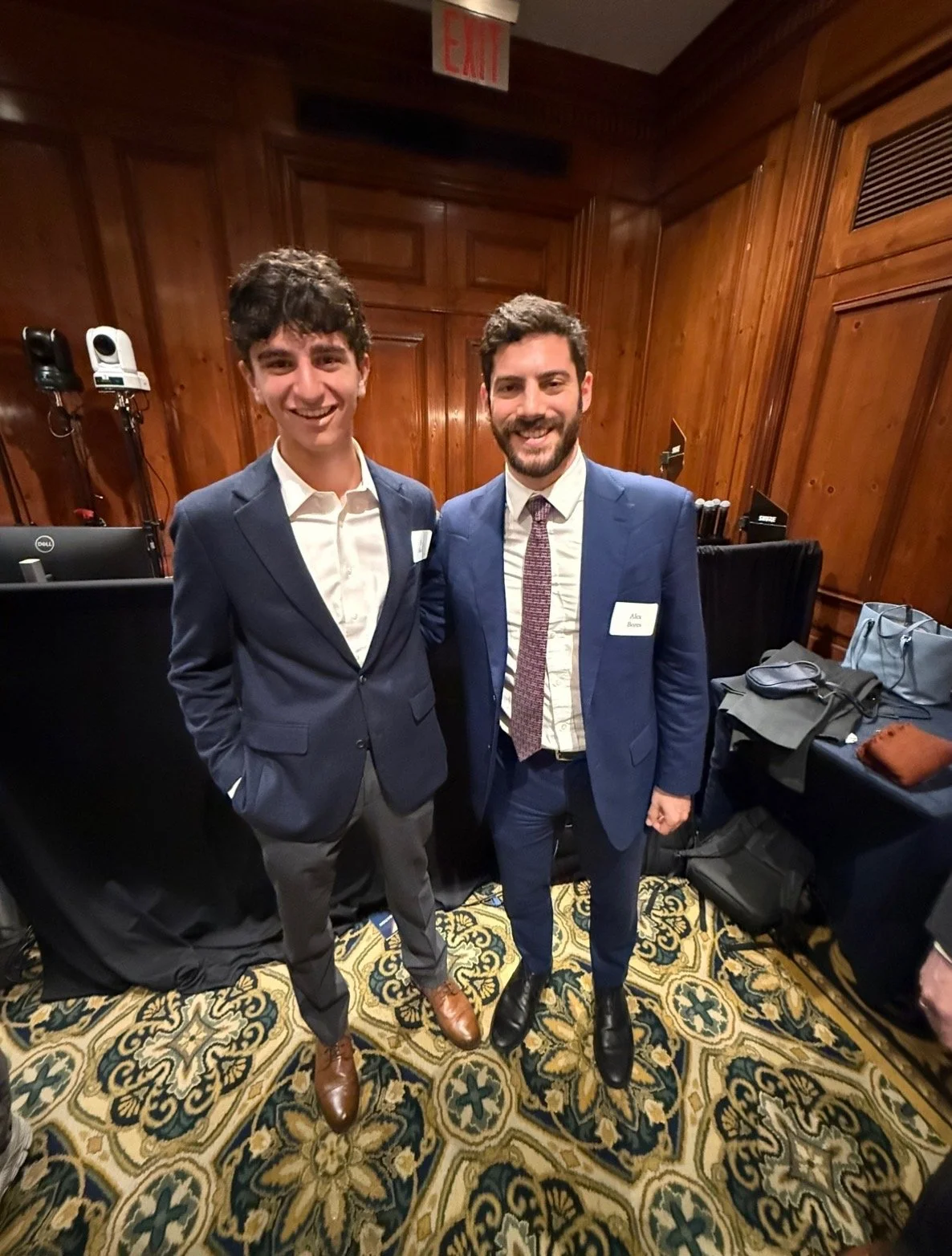
1. While in NYC, our founder Eli Fisch had the opportunity to meet and talk with NY state representative Alex Bores. Bores has been one of the nation’s leading legislators surrounding AI policy and implementation. He recently launched the organization Who Decides, which shares many of the same values as our organization. Check it out!
2. We also recently launched our AI literacy program! You can find our 28-slide presentation on our website with this link:
https://www.forwardprogressusa.com/ailiteracypresentation.
*This presentation is meant for learners of all ages. It teaches the basics of Artificial Intelligence, how to use the technology responsibly, and its benefits and challenges for modern-day society.
3. We also recently opened up our application form for Deputy Writer and Deputy Social Media Editor! Descriptions of both positions can be found on our social media and our application form. If you wish to apply, use the link below:
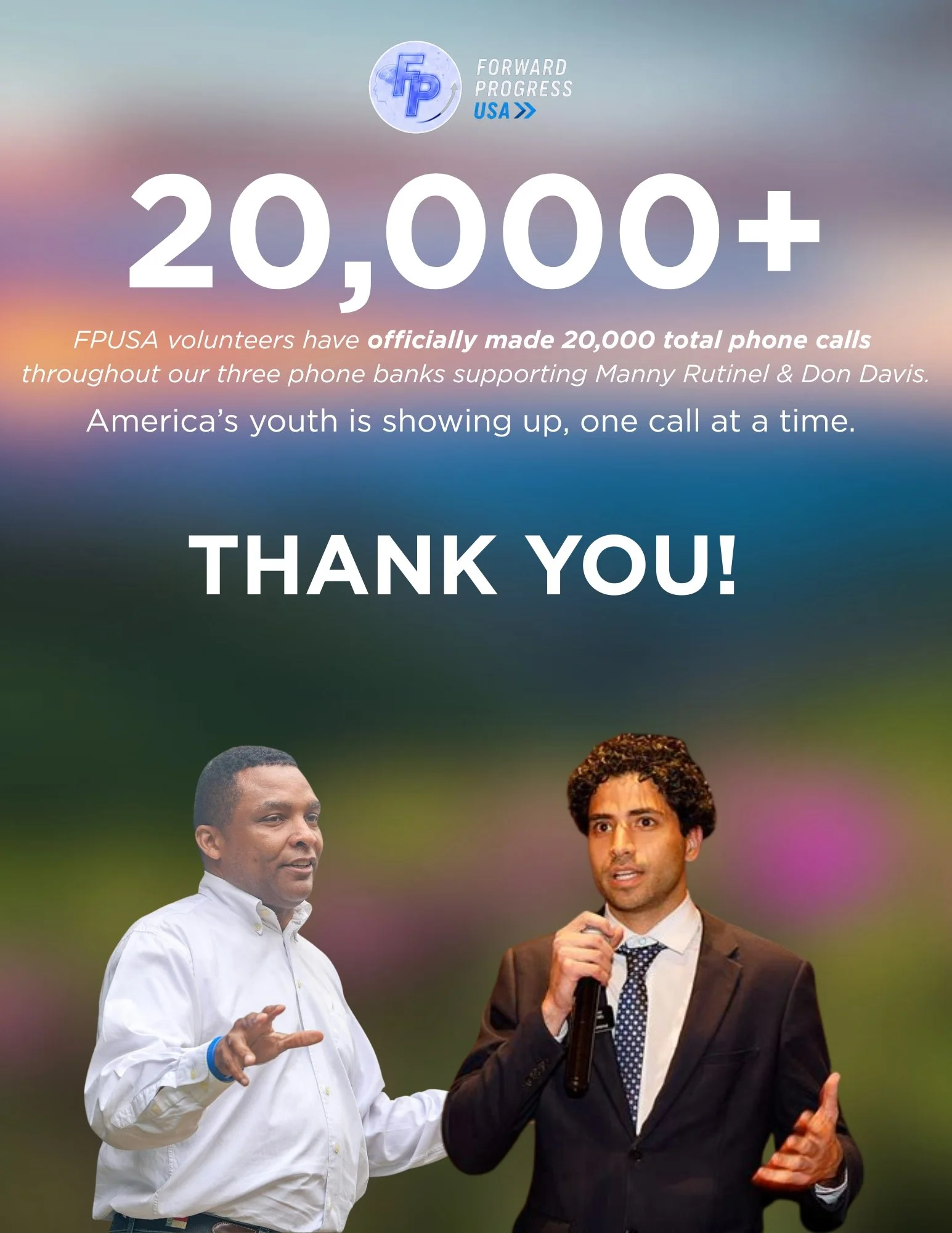
4. Lastly, We’ve officially reached 20,000+ voter contacts through 5 phone banks!
*We’ve phone banked for Manny Rutinel, Janelle Bynum, and Don Davis.
AI Policy Decision of the Month:
U.S. Supreme Court — Thaler v. Perlmutter cert denial
Summary:
This case is the first AI-related issue the Supreme Court has seen. The case's origins come from when a computer scientist, Stephen Thaler, tried to register a copyright for an image created by his artificial intelligence system, while listing AI as the author. The Supreme Court declined to hear the case, upholding the D.C. Circuit decision stating that the author must be a human, and for the moment Stephen Thaler would not be able to file a copyright for this image.
Government or institution responsible:
Judicial Branch (Supreme Court)
Country/state/locality:
United States
Date enacted, issued, or decided:
March 2nd, 2026
Policy category:
Copyright
Who is affected:
Primarily artists/any creator filing for copyright
Arguments in favor:
The Supreme Court’s denial to hear this case upholds humanity in creation. Copyright was designed to protect human creation and avoid plagiarism, and Artificial Intelligence is not a true “creator” as it is trained on a vast amount of data. Additionally, this decision avoids confusion over if the company, user or AI itself has the rights to the creation.
Arguments or concerns against:
If AI copyright was to be allowed, it would provide a massive economic incentive for AI companies and developers. Additionally, if other countries were to allow AI copyright, it could threaten the size and power of the U.S. AI industry.
Why it matters to young people:
This case brings forth a necessary discussion about what it means to be human and a creator. Additionally the youth is the largest user of AI, and cases like this answer the necessary question of rights and ownership over the content they generate.
Connection to FPUSA’s principles:
FPUSA agrees with the Supreme Court's denial to hear this case, upholding human ownership as a necessity for copyright. We maintain a people first approach and believe that AI should serve as a tool to human creation, and not necessarily the creator itself.
Current implementation status:
Active
Links to 2 Credible Sources:
AI on Campus: When Administrative Ambition Outpaces Understanding
The tale that has been told a thousand times: executives bearing down on the employees below them, forcing changes that are often divisive and unclear, but management thinks they need. From team “bonding” exercises no one wants to do, to mandatory overtime, many of the annoyances in corporate America are caused by the disconnected executives trying to make change for the better, but failing.
Now, take this exact mentality, and move it onto a college campus. With the advent of AI, college has changed radically. Now, administrations across the country say it's both imperative to use it and to stop it at the same time.
When I sat down with Dr. Kernahan, professor of psychological sciences and director of the Center for Excellence in Teaching and Learning at the University of Wisconsin River Falls, she described the effect AI was having on students. Around 25-30% of the student population surveyed there was opposed to AI usage in classrooms. At the same time, countless students are using it without guardrails to cheat through their classes.
While AI is unequivocally bad for learning when used to cheat, it seems the administration is less concerned about cheating and more concerned about teaching “AI skills,” a term even Dr. Kernahan could not seem to decipher. She told me that no one really knows what the common buzzwords around AI mean, so when the administration talks about AI, they’re really just “talking past each other.”
One administrator described this push to Dr. Kernahan as forcing these students to “eat their broccoli.” In his, like many other administrators' minds, it is essential to learn how to use AI effectively. However, this becomes a challenge when administrators’ lack a basic understanding of the technology. This trend applies nationwide, as 15% of professors are forced to use AI in classrooms, even if administrations do not have a good understanding of what students need to learn or how to teach it.
While there are definitely great applications for AI in teaching, if definitions and plans are not made to ensure it is used effectively, administrations risk causing a decrease in learning comprehension and student and faculty happiness.
Here at Forward Progress, we believe that solving the definition problem, what “AI skills” actually means, can clear up many of the uncertainties and pain points of AI usage. Instead of swinging to either extreme (forced AI usage or none at all) we believe in creating a framework for how to use it effectively in education to best mitigate the technology’s problems, whilst teaching students how to utilize its vast benefits.
In light of this interview, FPUSA has recently made and posted a faculty-approved and detailed presentation on AI literacy and school implementation. We hope to present it to schools across the country.
If you’d like to be a part of our work in revolutionizing how AI is taught and used in schools, please send us an email at forwardprogressusaoutreach@gmail.com.
From Inside the Mind of a Superintendent:
Barb Duffrin is a superintendent for Mahtomedi Public School District, a mid-sized school district in the suburbs of the Twin Cities.
Here are some of the things she had to say about AI during an interview led by our leader writer, Alex Goldfine:
Alex: What AI skills do you think graduates need to have?
Duffrin: Um. I think that's a really good question. I think it would be worthwhile for someone to understand how they could use AI kind of as a thought partner.
Alex: Has anti-cheating software improved since the inception of AI?
Duffrin: Yeah, I don't know…we were warned that there could be a lot of mistakes with that anti-cheating software…I think our teachers have gone the pathway of doing things like having people do some practice in the classroom with writing so they can see how students are learning. That assessment right there is in the classroom. So that they have a sense of what's happening with each student. So I do know that they are trying to avoid having situations where students would be tempted to use AI instead of doing their own work, which is kind of the best way to talk about how to prevent it. That's a long way to say I don't know if it's gotten better, but it was the shortest answer to give you.
Deepfakes and the Death of Truth:
Imagine watching a video of your favorite celebrity or a famous politician doing something shocking—something so outrageous that your immediate reaction is to share it with everyone you know. Now imagine finding out later that the entire video was faked by Artificial Intelligence. This isn't a distant worry; it’s happening right now. As AI technology becomes more accessible, "deepfakes"—hyper-realistic fake videos and audio recordings—are becoming easier to create and harder to spot. This raises a terrifying question for modern society: in a world where we can’t trust our eyes, how do we know what’s true?
The barrier to creating this fake content has basically disappeared. You no longer need a Hollywood budget or special effects experts to make someone appear to say something they never said. Today, a teenager with a laptop can take audio from a podcast and map it onto a video of a political figure, making them sound like they are endorsing a candidate or admitting to a scandal. Because these AI-generated files look and sound so realistic, they can go viral in minutes, spreading misinformation before fact-checkers even have time to wake up. The speed at which these lies travel is far faster than the speed of the truth.
This technology poses a massive threat to democracy, especially for young voters who get their news primarily from social media feeds. If bad actors can generate fake videos of candidates behaving badly right before an election, they can manipulate public opinion without ever having to campaign honestly. Even worse, if people start seeing too many fakes, they might stop believing anything, assuming that real evidence is also fake. This "liar's dividend" leads to apathy and confusion, allowing corrupt leaders to hide behind excuses whenever real scandals arise.
Some people suggest that technology is the only solution—that we need AI detectors to find AI fakes. But this is an endless arms race. For every detector created, hackers build a better generator that can bypass it. Relying solely on tech to solve a tech problem is a losing battle. We need a cultural shift in how we interact with digital media. We need to teach "media literacy" in schools—not just how to read books, but how to critically evaluate the sources of the images and videos we see online.
In the end, verifying the truth has to become a collective responsibility. We cannot let algorithms decide what we believe. We need to slow down our impulse to share sensational content and demand proof from credible sources. If we don't learn how to distinguish reality from fabrication in the age of AI, we risk losing the shared understanding of facts that holds our society together. Truth is no longer just something you find; it’s something you have to actively protect.
Sources:
Think About It:
Question: Is free AI training for teachers a public service or a marketing strategy?
Context: With companies like OpenAI and Anthropic offering free tools to educators that will expire in 2027–2028, schools are gaining valuable resources but also potentially becoming test markets for future commercial products. Who holds the power in these partnerships—the schools getting the training, or the companies gaining classroom data and loyalty?
Thank You!
Thank you for reading our first official newsletter! Stay tuned for more!
Forward Progress USA
Read Our First Newsletter Below!